FUNO
FUNO
FUNO IS AN INTERACTIVE TABLET APP DESIGNED TO MAKE ENGAGING WITH THE NAO HUMANOID ROBOT SIMPLE AND PLAYFUL FOR CHILDREN. THROUGH A CHILD-FRIENDLY INTERFACE, USERS CAN CONTROL MOVEMENT, SOUND, LIGHTS, TIMERS, AND LEARNING ACTIVITIES WITHOUT NEEDING ANY TECHNICAL KNOWLEDGE.
FUNO IS AN INTERACTIVE TABLET APP DESIGNED TO MAKE ENGAGING WITH THE NAO HUMANOID ROBOT SIMPLE AND PLAYFUL FOR CHILDREN. THROUGH A CHILD-FRIENDLY INTERFACE, USERS CAN CONTROL MOVEMENT, SOUND, LIGHTS, TIMERS, AND LEARNING ACTIVITIES WITHOUT NEEDING ANY TECHNICAL KNOWLEDGE.
HUMANOID SOCCER LEAGUE (HSL), MECHATRONICS RESEARCH LAB, QIAU
Year
3 MONTH
Category
UX/UI DESIGN · INTERACTION DESIGN
Live Project
View Now

Collaborative Design
Collaborative Design
From understanding how NAO is controlled to designing a playful experience for children , FUNO evolved through research, interaction design, and visual exploration.
From understanding how NAO is controlled to designing a playful experience for children , FUNO evolved through research, interaction design, and visual exploration.
" height="167px" id="cyqDoSKRd" width="1390px"/></g></svg>)
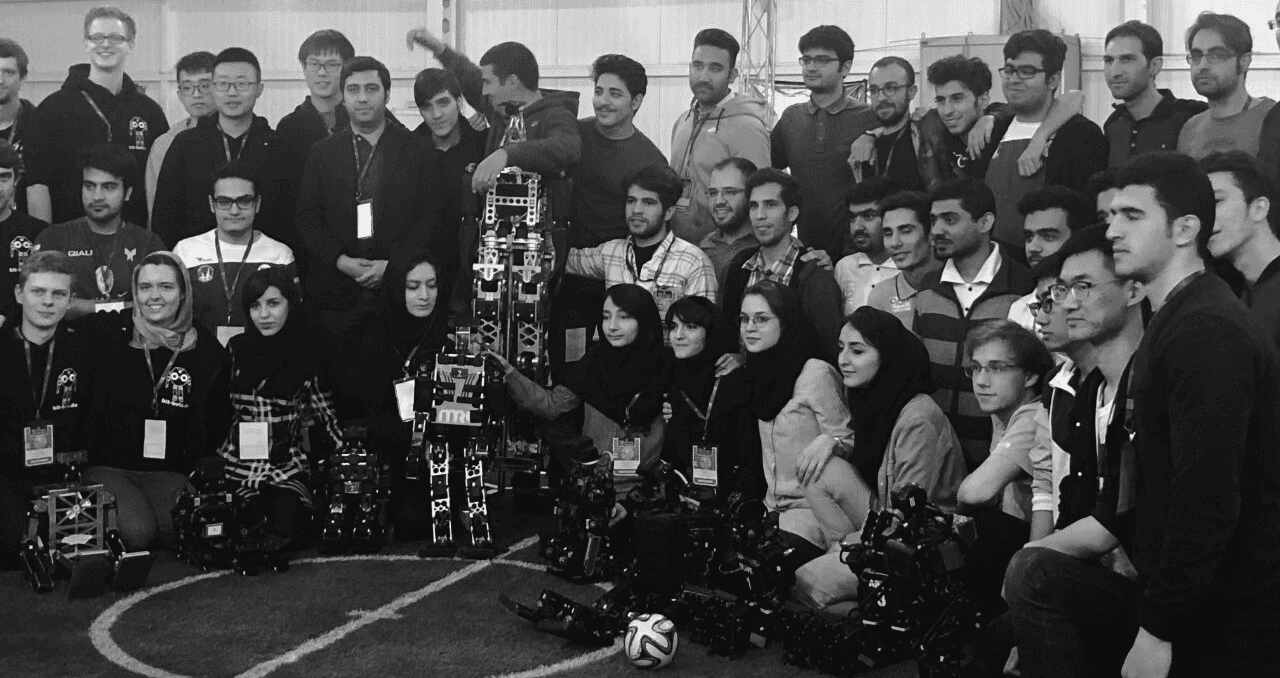
It’s not just me, it’s all of us!
MRL-HSL is made up of three main sub-teams
MRL-HSL is made up of three main sub-teams
MRL-HSL is made up of three main sub-teams

Electronics
Software

Mechanics

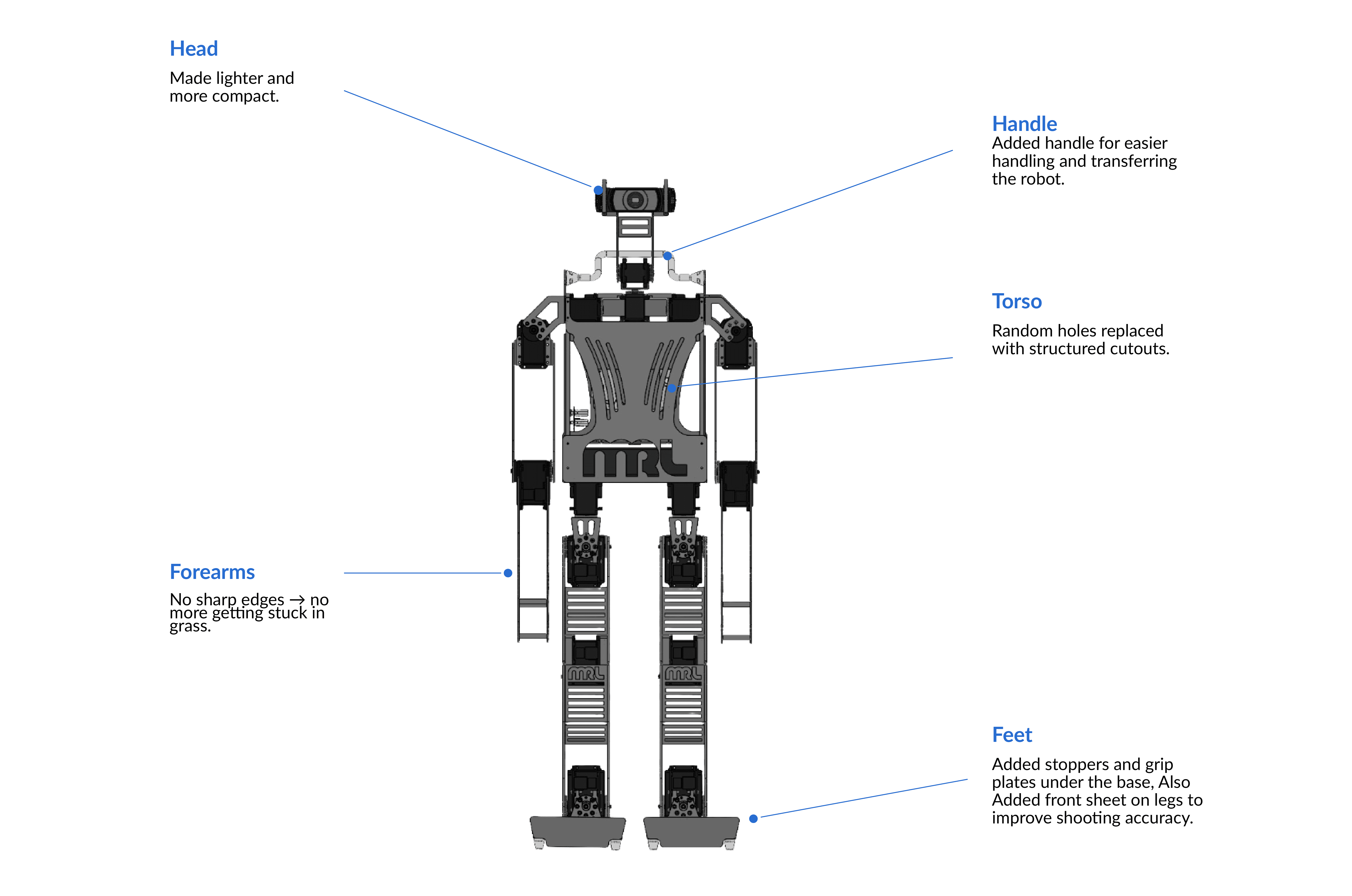
We began with a kid-size humanoid robot, but to compete in the Teen Size category we needed a completely new platform. I designed this robot by drawing inspiration from our kid-size model, as well as NAO, DARwIn-OP, and human golden-ratio proportionOPs.
The kid-size platform gave us a clear baseline for joint alignment, actuator range, and overall body proportions. Analyzing its performance on grass, weight distribution, and kicking stability helped define the mechanical requirements for the teen-size robot.
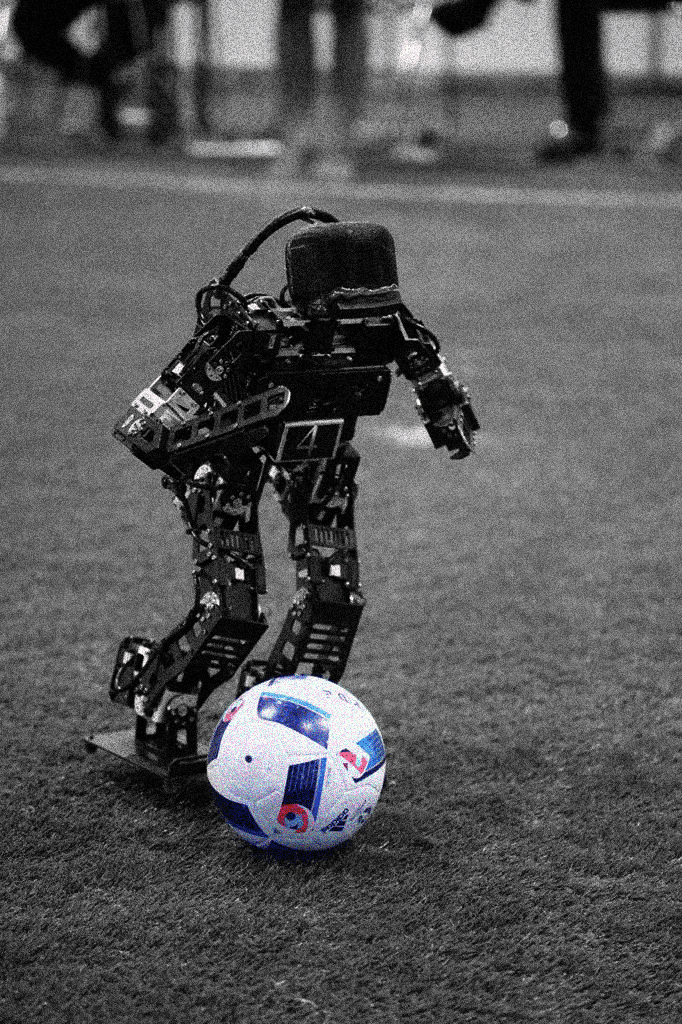
Kid-size robot
We began with a kid-size humanoid robot, but to compete in the Teen Size category we needed a completely new platform. I designed this robot by drawing inspiration from our kid-size model, as well as NAO, DARwIn-OP, and human golden-ratio proportionOPs.
The kid-size platform gave us a clear baseline for joint alignment, actuator range, and overall body proportions. Analyzing its performance on grass, weight distribution, and kicking stability helped define the mechanical requirements for the teen-size robot.
Kid-size robot
Foundation Research
Foundation Research
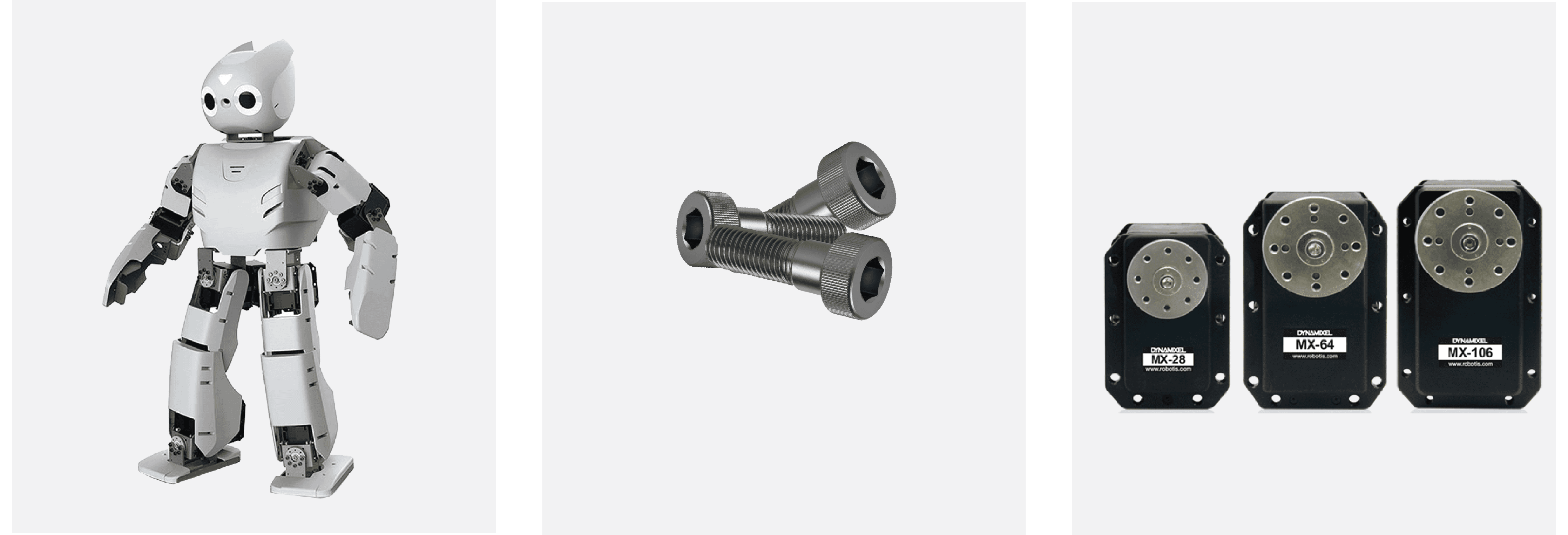
I explored screw types, actuator options, and material behaviors, selecting the final motor model with the electronics team. The body material had to resist deformation, avoid reflective surfaces that could disrupt vision systems, and still be easy to machine and polish. These early decisions guided the structure of the teen-size robot.
I explored screw types, actuator options, and material behaviors, selecting the final motor model with the electronics team. The body material had to resist deformation, avoid reflective surfaces that could disrupt vision systems, and still be easy to machine and polish. These early decisions guided the structure of the teen-size robot.

6061-T6 aluminum
Studying Existing Platforms
Mechanical Joint Hardware
Actuator Selection
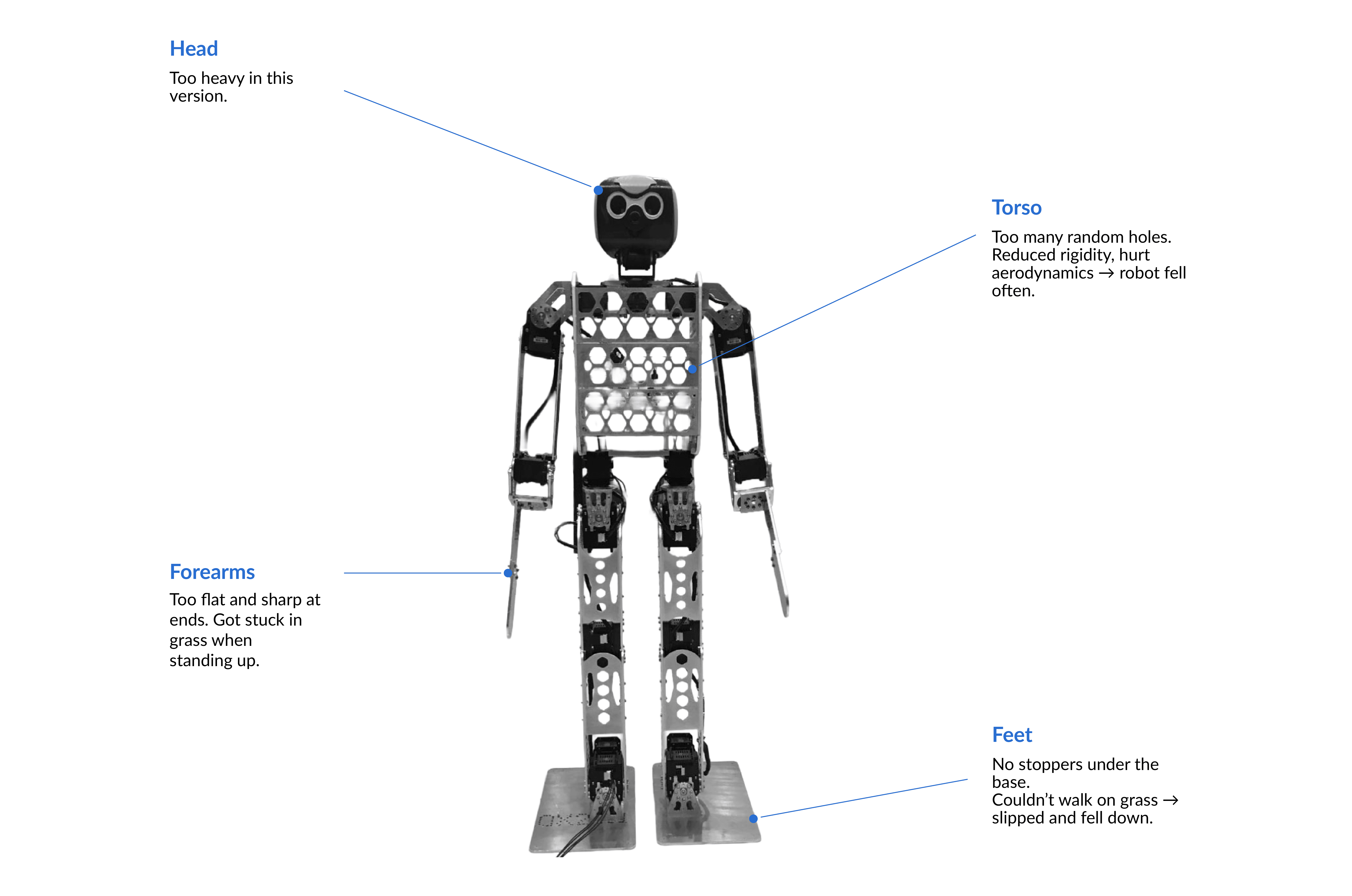
Prototype / Failed Version
Final / Improved Version