Chicken Fun
Chicken Fun
A chicken-shaped playground for 20+ children aged 5–12, inspired by Chicken Run. The body is a play corridor that links climbing, sliding, sensory play and a cooperative escape game. Individual project for PlayCore, through an industry practicum class.
A chicken-shaped playground for 20+ children aged 5–12, inspired by Chicken Run. The body is a play corridor that links climbing, sliding, sensory play and a cooperative escape game. Individual project for PlayCore, through an industry practicum class.
HUMANOID SOCCER LEAGUE (HSL), MECHATRONICS RESEARCH LAB, QIAU
Year
4 months
Category
Playground Design
Live Project
View Now

Collaborative Design
Collaborative Design
Most playground equipment is a row of separate activities. The brief was a playground for 20 or more children aged 5–12 where the activities connect into one shared adventure.
It had to balance the story with the practical side: varied physical challenge, an accessible route, safety, a buildable structure and outdoor durability, while staying easy for parents to supervise.
" height="167px" id="cyqDoSKRd" width="1390px"/></g></svg>)
It’s not just me, it’s all of us!
MRL-HSL is made up of three main sub-teams
MRL-HSL is made up of three main sub-teams
MRL-HSL is made up of three main sub-teams

Electronics
Software

Mechanics

We began with a kid-size humanoid robot, but to compete in the Teen Size category we needed a completely new platform. I designed this robot by drawing inspiration from our kid-size model, as well as NAO, DARwIn-OP, and human golden-ratio proportionOPs.
The kid-size platform gave us a clear baseline for joint alignment, actuator range, and overall body proportions. Analyzing its performance on grass, weight distribution, and kicking stability helped define the mechanical requirements for the teen-size robot.
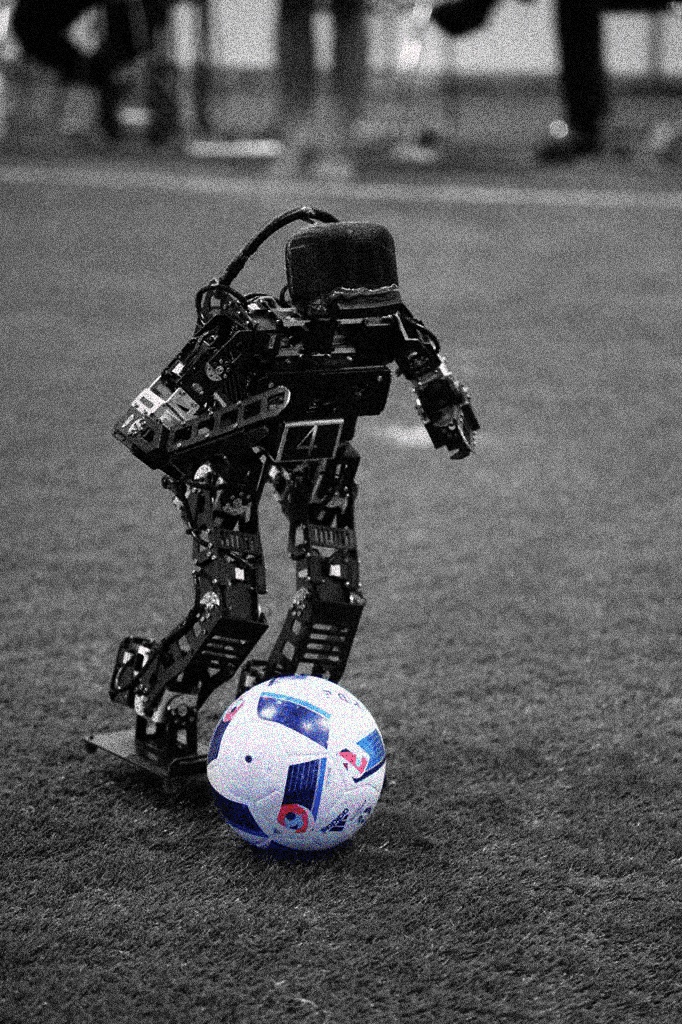
Kid-size robot
We began with a kid-size humanoid robot, but to compete in the Teen Size category we needed a completely new platform. I designed this robot by drawing inspiration from our kid-size model, as well as NAO, DARwIn-OP, and human golden-ratio proportionOPs.
The kid-size platform gave us a clear baseline for joint alignment, actuator range, and overall body proportions. Analyzing its performance on grass, weight distribution, and kicking stability helped define the mechanical requirements for the teen-size robot.
Kid-size robot
Foundation Research
Foundation Research
Children aged 5–12 differ a lot in strength, balance, confidence and social play. Younger children get sensory panels, ground-level games and low exploration; older children get the climbing wall, monkey bars and elevated play.
Parents and caregivers are the second user group, so the layout keeps sightlines open around the structure. Children with mobility differences enter by a ramp and can join the ground-level and cooperative games.

6061-T6 aluminum
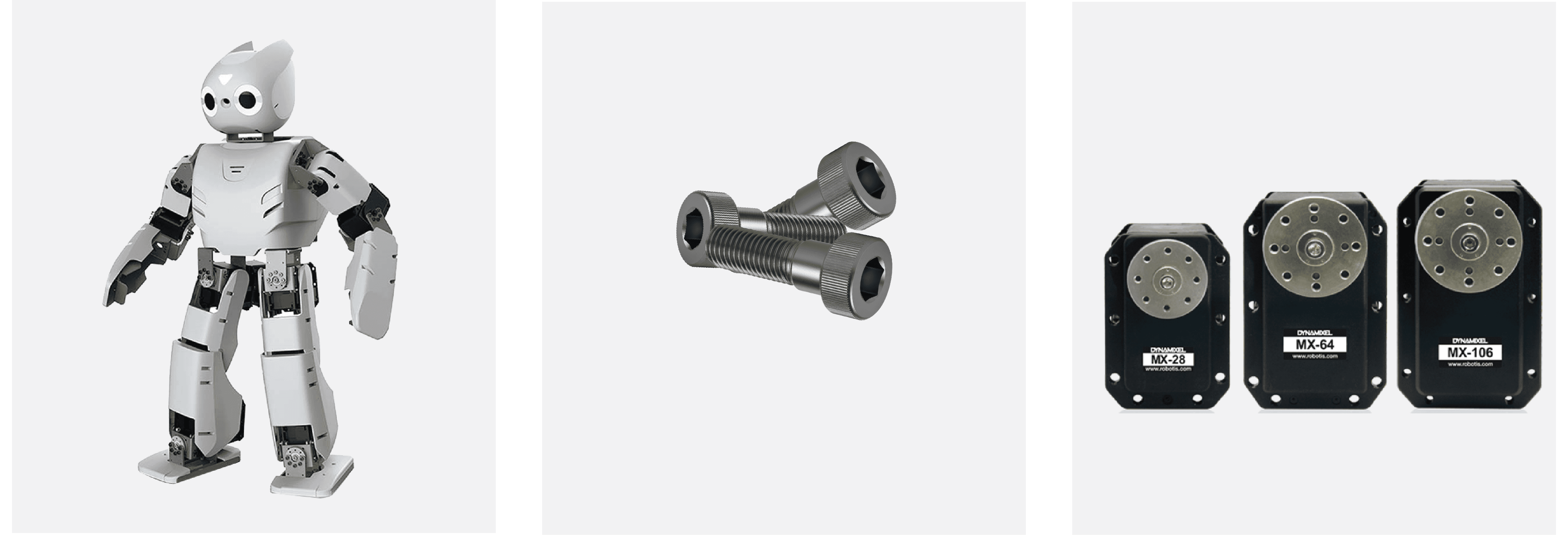
Studying Existing Platforms
Mechanical Joint Hardware
Actuator Selection
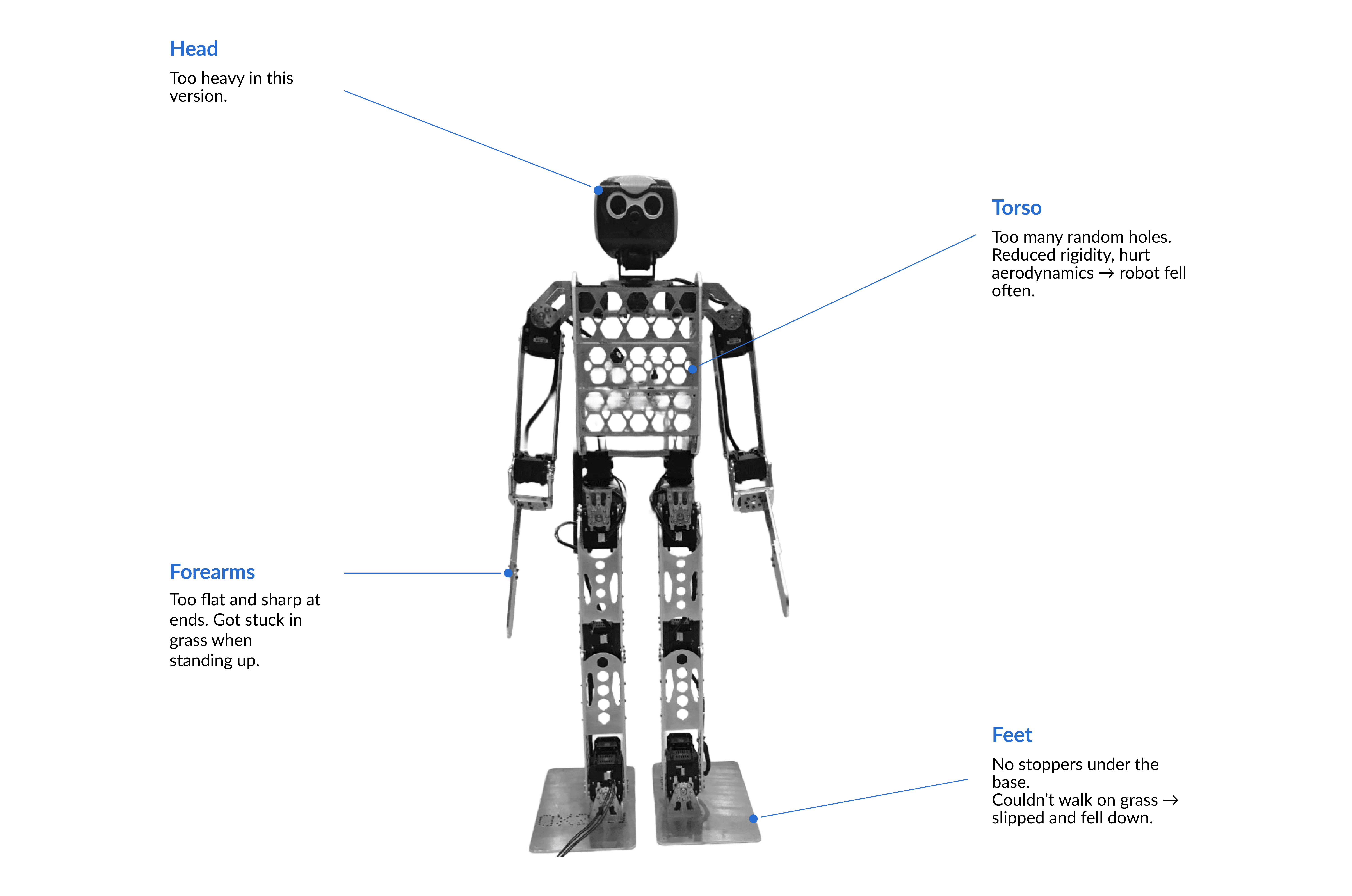
Prototype / Failed Version
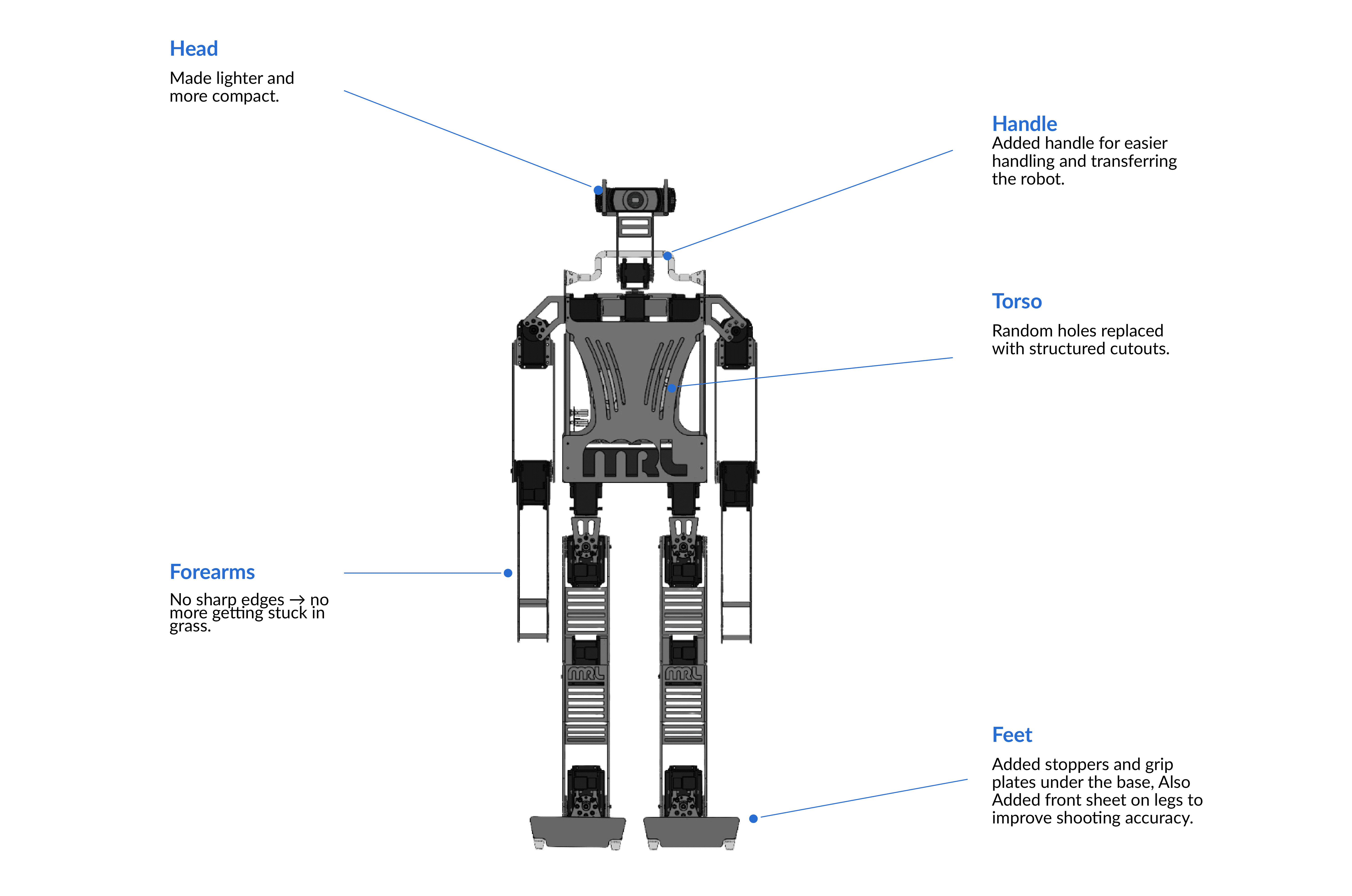
Final / Improved Version
Dimensions